
NeuRoads NM uses the internationally recognized Mayo-Portland Adaptability Inventory-4 (MPAI-4) to assess progress at intake and at six-month intervals throughout treatment. The MPAI-4 measures Ability, Adjustment, and Participation, guiding individualized care and tracking meaningful rehabilitation outcomes over time.
The Mayo-Portland Adaptability Inventory-4 (MPAI-4) is an industry-recognized assessment tool and a national standard supported by the Brain Injury Association. It assesses functioning across 35 distinct areas to determine the severity and impact of a brain injury.
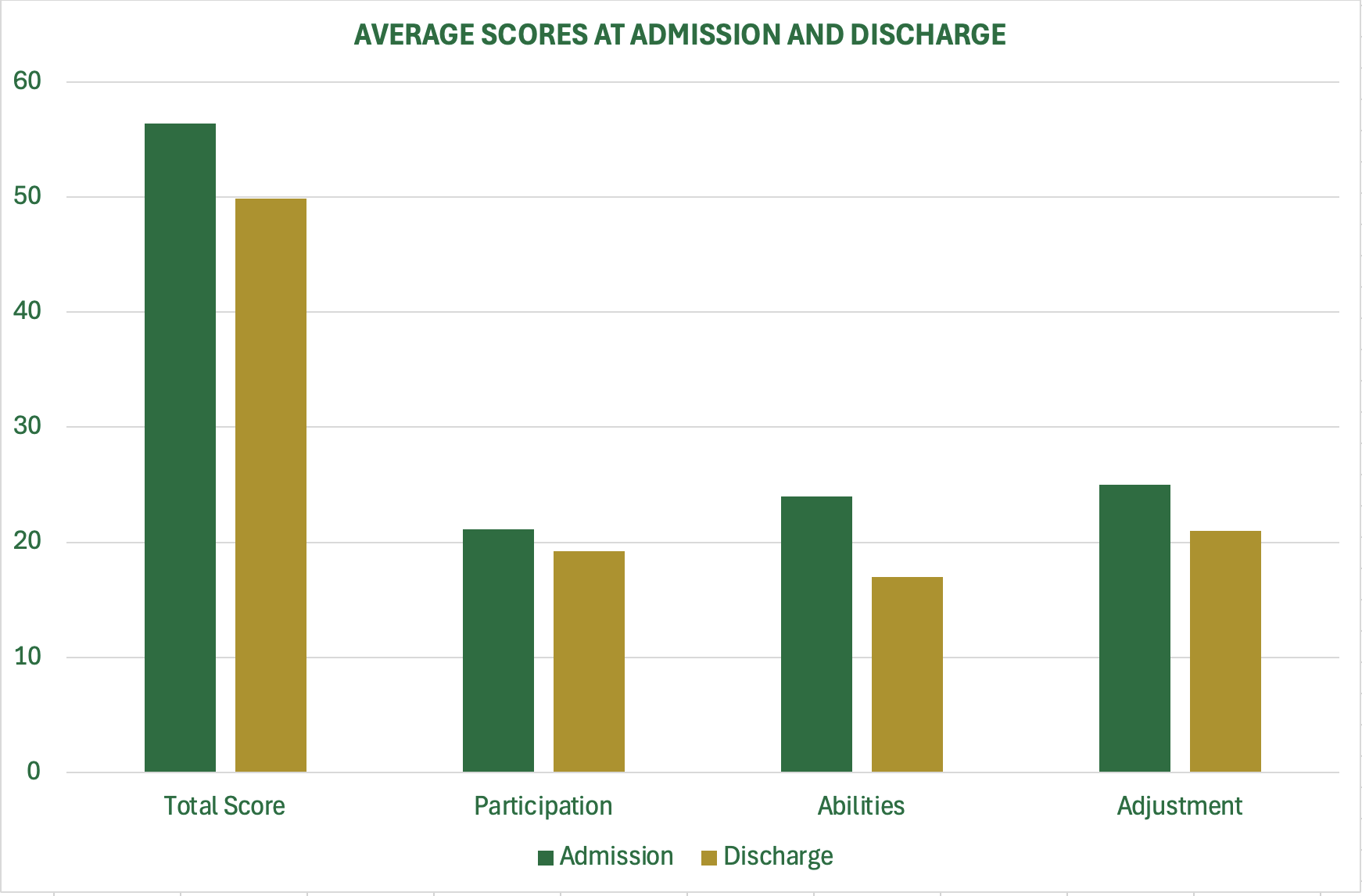
This graph displays the average participant scores for total functioning, participation, abilities, and adjustment at both admission and discharge. Higher scores indicate greater injury severity, while lower scores reflect reduced acuity. NeuRoads NM data demonstrates statistically significant improvement in overall functioning over the course of treatment. Clinically significant improvement is typically defined as a change of at least 5 T-score points, which is recognized as meaningful within clinical standards.
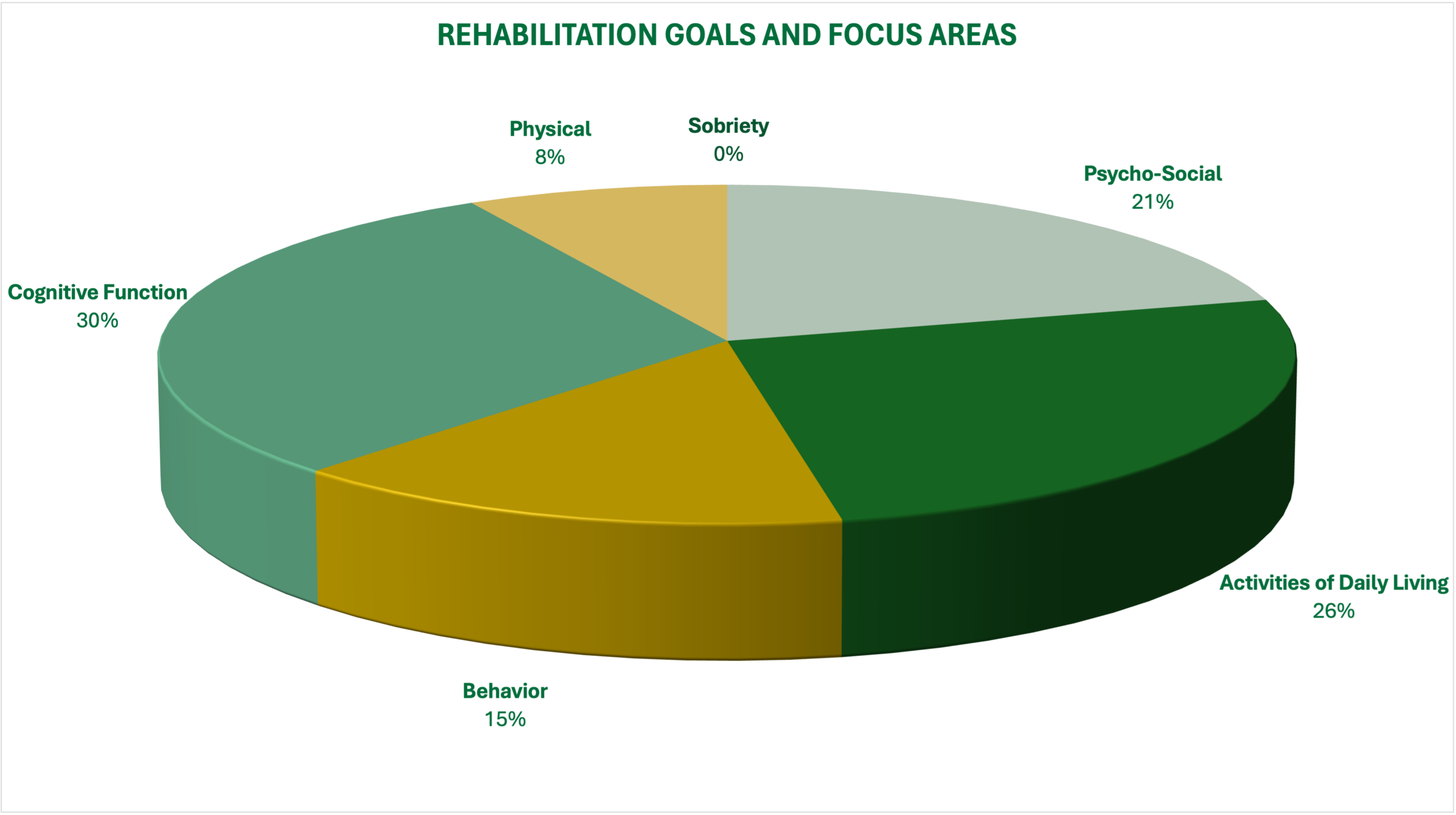
NeuRoads NM delivers individualized rehabilitation across key areas of focus designed to support recovery, independence, and community integration. These areas include:
Activities of Daily Living
Eating habits, personal hygiene, dressing skills, home living skills, and community adaptation.
Behavior and Sobriety
Initiation skills, appropriate emotional expression, impulse control, judgment, and accountability, along with support for past substance use concerns, coordination with licensed Drug and Alcohol Abuse counselors, and assistance locating and attending recovery meetings as needed.
Cognitive Function
Problem-solving, short-term memory, attention, orientation, and flexible thinking.
Physical Health and Mobility
Overall physical condition, motor skills, mobility, gross motor development, and health awareness.
Psychosocial Development
Social interaction skills, emotional stability, adjustment to limitations, self-esteem, and appropriate interpersonal behavior.
Community vocational engagement is a vital component of the rehabilitation process. Supporting participants in finding meaningful ways to connect with their communities—whether through employment or volunteer opportunities—is a core service provided by ARCA NeuRoads.
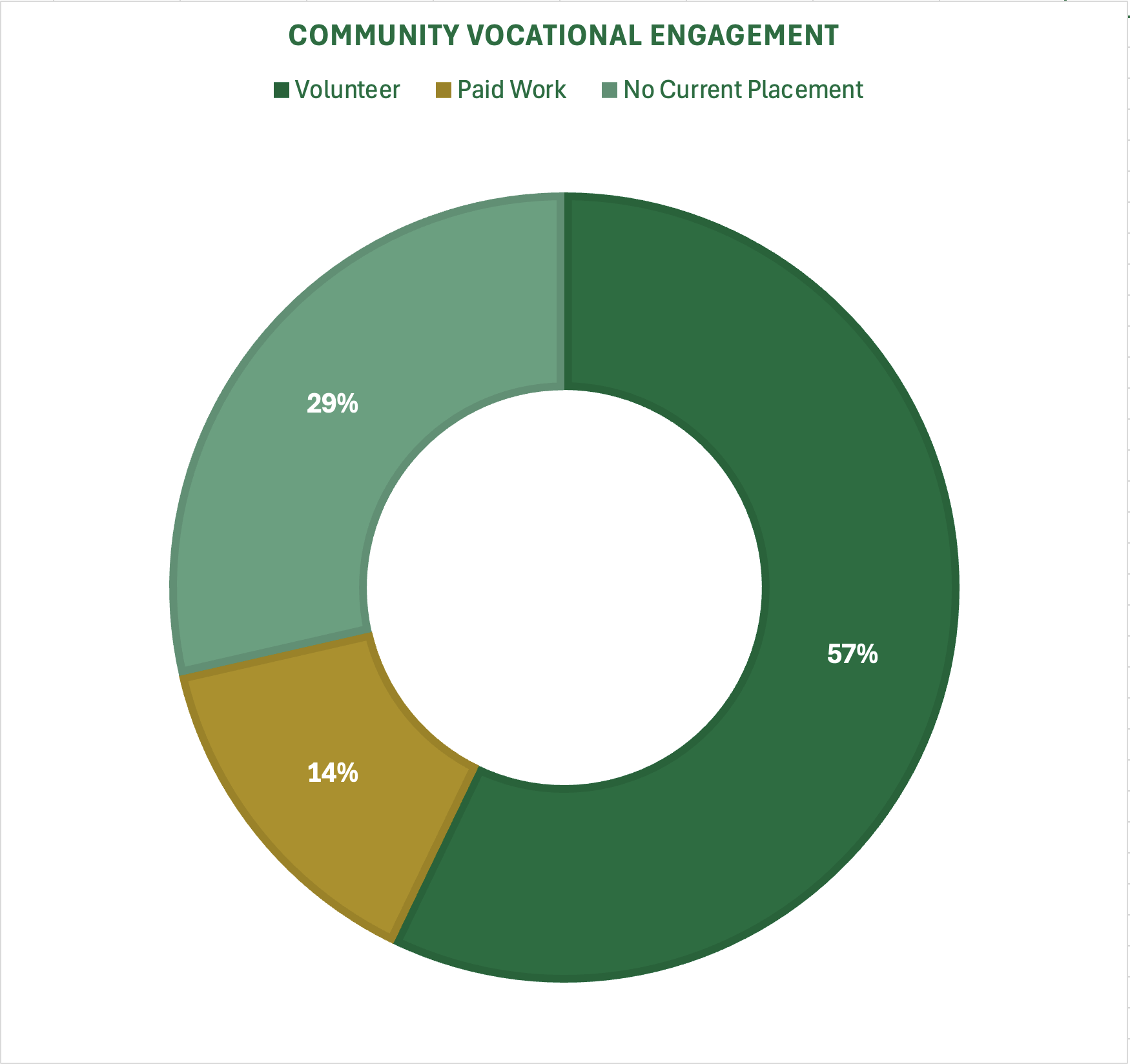
This chart illustrates the number of participants currently engaged in paid employment or community-based volunteer work. At present, 73% of participants are actively involved in vocational or volunteer activities.
This reflects significant progress, as most participants enter the program without employment or active community involvement. The increase highlights the program’s success in fostering independence, purpose, and community integration.
The Berg Balance Scale (BBS) is a clinical assessment used to measure a person’s balance and risk of falling through 14 functional tasks such as standing, reaching, and turning. Each task is scored from 0 to 4, with a maximum total of 56 points, where higher scores indicate better balance. Scores below 45 generally suggest an increased risk of falls. The BBS is commonly used in rehabilitation settings to track progress, guide treatment, and evaluate balance in individuals with conditions like stroke, brain injury, or age-related mobility issues.
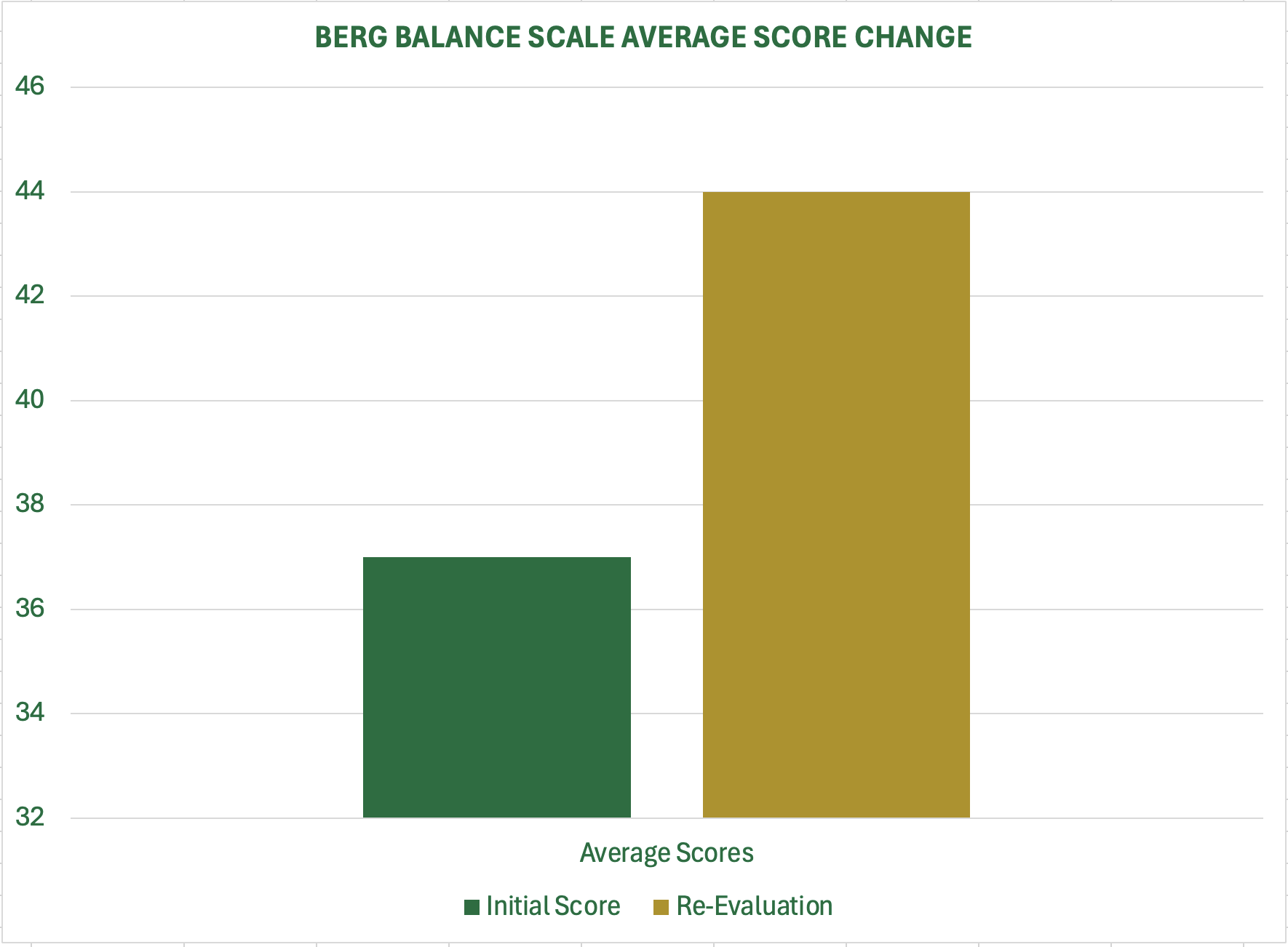
The graph shows a reduction in fall risk due to the average increase of 7-point increase in score. On average, each participant improved by an average of 4 points. Clinically significant improvement is typically defined as a change of at least 4 points, which is recognized as meaningful within clinical standards.